
Meal Prep & Freezer-Friendly
1-Hour Meal Prep for Weeks When Dinner Feels Like Too Much
You do not need a fridge full of identical containers or an entire Sunday in the kitchen. One focused hour can take enough work out of the next few dinners that 6 p.m. feels less like starting from zero.
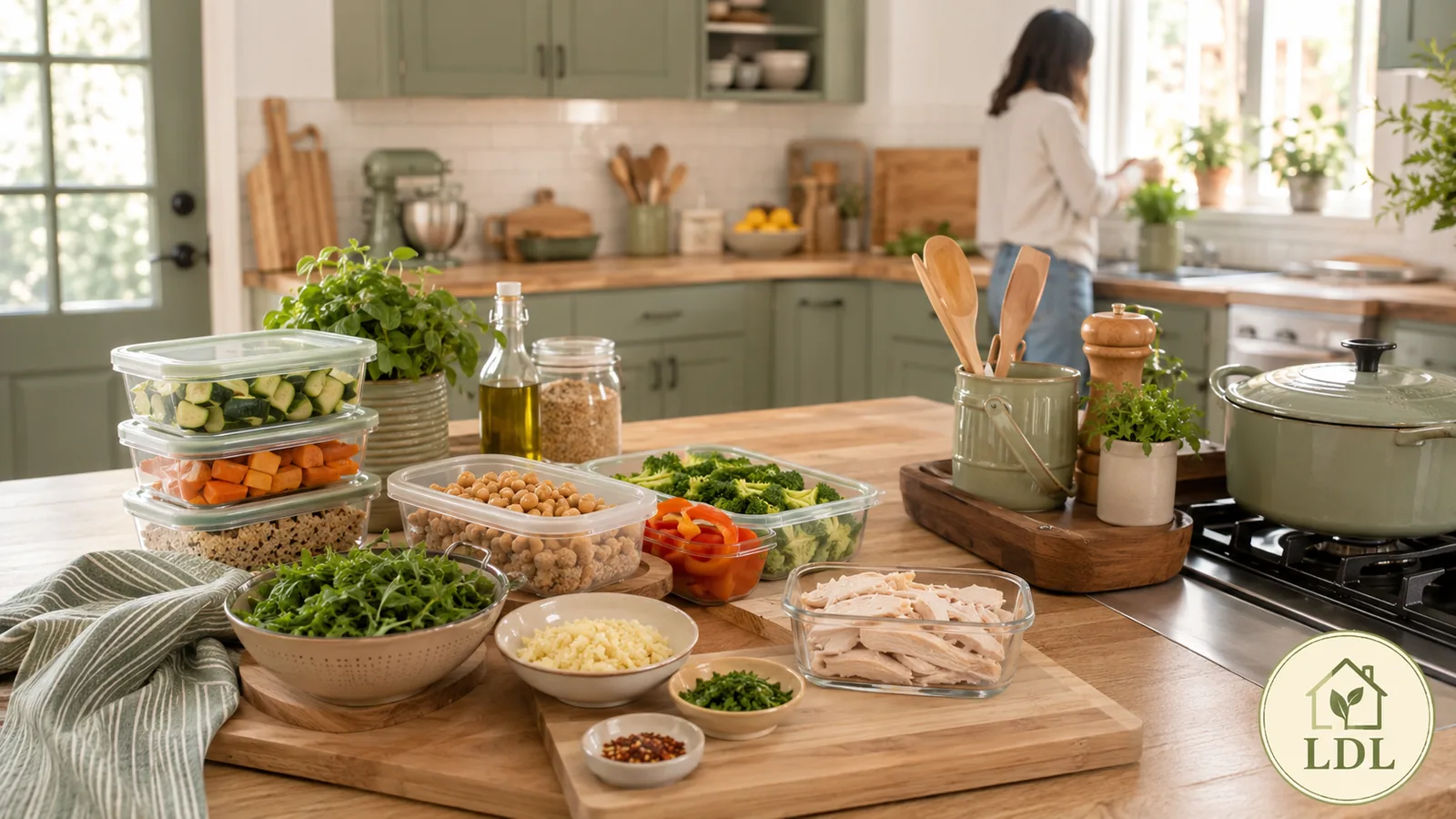
There is a very specific kind of tired that arrives around dinner time. You open the refrigerator hoping something will somehow have become a meal while you were busy. There is food in there—maybe plenty of it—but the chicken still needs cooking, the vegetables still need chopping, the rice still needs starting, and the thought of making all those tiny decisions feels heavier than the actual recipe.
That is the problem this kind of meal prep is meant to solve. Not “How can I become the person who cooks twelve perfect meals every Sunday?” but “How can I make Wednesday dinner require less from me than it usually does?”
The goal is not to finish every meal in advance. It is to remove the parts that repeatedly make you stall: washing, chopping, cooking one basic component, portioning leftovers, and deciding what needs to be used first. When those pieces are already handled, dinner can become assembly instead of another project.
First, decide what you want the hour to fix
Before setting a timer, think about the moment that usually breaks down during the week. Maybe you come home hungry and nothing is ready. Maybe you have ingredients but no energy to chop them. Maybe leftovers are hidden in the back of the fridge until nobody trusts them anymore.
Pick one main pain point. Your one-hour prep should solve that first.
- If chopping is what stops you: wash and cut the vegetables you use most.
- If cooking a protein feels like the biggest job: prepare one versatile protein or bean-based component you can reuse.
- If side dishes make dinner drag on: make one grain, potato or other base ahead.
- If food gets forgotten: portion and label what is already cooked before making anything new.
- If the problem is deciding: choose three loose meal directions before you start—not seven fully planned dinners.
Meal prep should reduce the work that annoys you most. Otherwise you can spend an hour “being productive” and still hit the same wall on Tuesday.
Do not plan seven dinners. Plan building blocks.
A rigid meal plan can fall apart the first night someone is late, a child refuses the meal, you are not hungry for what you planned, or you simply cannot face eating the same thing again.
A building-block plan is more forgiving. Think in a few categories:
- one base: rice, pasta, potatoes, quinoa or another staple you already eat;
- one main component: cooked chicken, beans, lentils, tofu, minced meat or another option that fits your household;
- two vegetables: one that can be cooked now and one that can stay fresh for quick use;
- one flavor shortcut: a sauce, dressing, spice mix or marinade you already like;
- one emergency extra: eggs, frozen vegetables, canned beans, bread or another fast ingredient that can rescue a meal when plans change.
Those same pieces can become a bowl one night, a wrap another night, a quick stir-fry, a salad, a pasta add-in or a side for something you cook fresh. You are not preparing five meals. You are making five future meals easier to begin.
Related: 10 Cooking Shortcuts That Actually Save Time →
A realistic 60-minute meal-prep routine
You do not need to follow these minutes perfectly. The point is to keep one task moving while another cooks so the hour does not turn into ninety minutes of stopping, cleaning and restarting.
Minutes 0–10: start the thing that takes the longest
Start the oven, rice cooker, pot of water or whatever component needs the most passive time. While that begins, clear one section of counter and get out only the tools you will use.
This is also the moment to look through the refrigerator before opening new ingredients. If half an onion, a few carrots or cooked rice already need using, let those shape the prep. Meal prep saves very little if it creates new food while older food quietly expires behind it.
Minutes 10–25: wash and chop what future-you is least likely to want to chop
If every week you buy vegetables with good intentions and then avoid them because washing and cutting them feels like too much at dinner time, this is where the hour earns its keep.
Prep only the produce that stores well after cutting and that you know you will use. Some foods are better left whole until closer to eating, so follow the storage guidance appropriate to the ingredient.
You can also make tomorrow's job smaller without fully prepping it: wash produce, group ingredients for one meal together, or put the ingredients that need using first at the front of the fridge.
Minutes 25–40: cook one flexible main component
This is not the time to make three separate mains. Choose one thing that can move between meals.
For example, a simply seasoned protein can be served with rice one night and turned into wraps or a salad the next. Beans or lentils can become bowls, soup, wraps or a side. Roasted vegetables can sit beside a main meal, go into pasta or fill a quick lunch.
Keep seasoning broad enough that you can change the direction later. You can always add sauce, herbs or spice at serving time. It is much harder to turn five heavily seasoned portions into something you suddenly want to taste different.
Minutes 40–50: portion only what benefits from being portioned
There is no prize for putting every ingredient into its own matching container.
Portion something when it solves a real problem:
- you need lunches that can leave the house quickly;
- you tend to eat all of a prepared ingredient before saving some for another meal;
- you forget what is cooked unless you can see individual servings;
- different family members eat at different times.
If none of those applies, one larger container may be easier to wash, store and maintain.
Minutes 50–60: label what matters and reset the kitchen
The last ten minutes are what stop meal prep from becoming “I made food and destroyed the kitchen.” Put ingredients away, wipe the prep surface, and label anything you might forget.
You do not need pretty labels. Masking tape and a marker work. The useful information is usually the food name and the date—not a perfectly coordinated refrigerator.
Then stop. If you keep adding “just one more thing,” the one-hour system becomes the all-afternoon system you were trying to avoid.
What to prep when you have no idea what you will want later
This is where many meal-prep plans become unrealistic. You might know you need to eat this week, but you do not know whether Thursday-you will want pasta, rice, soup or takeaway.
When that is the case, prep the boring parts—not the whole meal.
- wash and chop a few sturdy vegetables;
- cook one neutral grain or starch;
- prepare one protein or plant-based main component;
- mix one sauce or dressing;
- make one snack or breakfast component if mornings are harder than dinners.
That gives you options without locking you into a menu. The best meal prep is often the kind you barely notice because it quietly removes twenty minutes from a meal you decide to make later.
Use the containers you already own before buying a “meal-prep system”
If your current containers close properly, fit your refrigerator and are safe for the way you use them, start there. A new set will not make meal prep easier if the real problem is that you never know what to cook.
Containers become worth reconsidering when the current ones create friction: lids never match, sizes are awkward, you cannot stack them, you cannot see what is inside, or you need repeatable portions for work or school.
For someone who specifically wants same-size glass containers, the BOROHOUSE 5-Pack Borosilicate Glass Meal Prep Containers uses five matching 4.4-cup containers. Same-size pieces can make stacking and portioning predictable, but glass is also heavier than plastic and can be inconvenient if you carry food around every day.
Think twice before buying a glass set: measure your refrigerator shelf, consider the weight if you commute with food, and recheck the current seller instructions before using the container or lid in the microwave, oven, freezer or dishwasher.
Read our guide to the BOROHOUSE glass container set →
Labels are useful when your memory is the weak link
Sometimes the problem is not cooking. It is opening the fridge three days later and thinking, “When did I make this?”
If that happens often, labeling can remove the guesswork. Again, start with what you have. Tape and a marker are enough.
If you label food constantly and want something made for quick dates and names, the Hebayy removable food labels are one option. The listed labels are 1 × 2 inches and come in a 1,000-count roll, which is useful for a household that labels frequently but excessive if you only need a few labels each month.
The seller describes them as removable, but adhesive performance can vary with condensation, oily surfaces and freezer conditions. A simple label should make food easier to track—not become another supply you have to manage.
Read our guide to the Hebayy removable food labels →
Do you need refrigerator bins for meal prep?
Not automatically.
A bin helps when prepared ingredients keep spreading across a shelf, small containers get pushed behind milk or condiments, or different parts of one meal end up in different corners of the refrigerator.
Before buying anything, try using an empty tray or basket you already own as a “use this first” zone. Put the prepared vegetables, cooked component and opened ingredients for the next couple of meals together. If the tray makes the week easier, you have learned that grouping—not the specific organizer—is what solves the problem.
If you eventually want clear handled bins for that job, the Beauty Cottage Stackable Refrigerator Organizer Bins are one six-bin option. Each is listed at roughly 6 × 10 × 3 inches. They are open organizers rather than sealed food containers, and the seller says they should be hand-washed rather than placed in the dishwasher.
Think twice: six bins can organize a refrigerator, but they can also consume valuable shelf height if your fridge is already tight. Measure the actual shelf opening before planning a stacked layout.
Also useful: How to Organize a Small Pantry When You Can't Find Anything →
If one hour still feels like too much, use the 20-minute version
Some weeks, even an hour is not realistic. That does not mean meal prep has failed.
Use twenty minutes for the task that will save you the most resistance later:
- 5 minutes: check the fridge and decide what needs using first;
- 10 minutes: prep one vegetable, one breakfast item or one flexible ingredient;
- 5 minutes: portion or label what is already cooked.
A smaller system you repeat is more useful than a beautiful two-hour routine you avoid because you are exhausted.
What a successful meal-prep week should actually feel like
The proof is not a photograph of a perfectly organized refrigerator.
The proof is Tuesday evening when you realize the vegetables are already washed. Wednesday when lunch is in a container instead of becoming another decision. Thursday when you can turn two prepared ingredients into a meal even though the original plan changed.
If the prep gives you fewer decisions, less chopping, less food forgotten at the back of the fridge or less temptation to give up on dinner because starting feels too hard, it is working.
If you spend the whole week maintaining the system, washing extra containers and forcing yourself to eat meals you no longer want, simplify it. Meal prep is supposed to serve the week. The week does not need to serve the meal-prep plan.
Your one-hour version
Start with three things, not a whole week's menu
If you want to try this without overthinking it, prep one base, one main component and one vegetable. Add a sauce or dressing you already like. Put the food where you can see it. Label what you are likely to forget.
Then let the week tell you what is worth repeating. If pre-chopped vegetables save you every time, keep doing that. If a cooked grain sits untouched until Friday, stop making it ahead. Your meal-prep system should become more personal over time, not more complicated.
FAQ
Common questions about one-hour meal prep
Is one hour really enough for meal prep?
It can be enough if the goal is to prepare a few flexible components rather than cook every meal for the week. Start one long-cooking item first, prep another ingredient while it cooks, then use the final minutes for portioning and cleanup.
What should a beginner meal prep first?
Choose the part of dinner that causes the most repeated friction. For many people that is chopping vegetables, cooking a basic grain, preparing one main component or simply deciding which food needs to be used first.
Do I need special meal-prep containers?
No. Use containers you already own if they fit your storage and food-use needs. Consider a new set only when mismatched lids, awkward sizes, poor stacking or portability repeatedly make the current system harder to use.
How long can cooked meal-prep food stay in the refrigerator?
USDA guidance says most cooked leftovers should be used within three to four days and refrigerated promptly. Different foods can have different handling needs, so follow current official guidance and the instructions appropriate to the food you prepared.
What if I get tired of eating the same food?
Prep flexible ingredients instead of five identical finished meals. A neutral grain, protein or bean component, vegetables and a couple of different sauces can move in different directions during the week.
Your turn
What stops one-hour meal prep from helping your week?
Tell us which planning, preparation or storage step makes meal prep feel like another project.
Comments are reviewed before anything is published. Your response will not appear publicly automatically.
Continue
Make the rest of the week lighter
A note on this guide: Lighter Day Living has not personally tested the products linked in this article. Product links in this article open Lighter Day Living product guides rather than Amazon directly. Each guide contains clearly labeled Amazon affiliate links. Product details come from the retailer listing information reviewed for this guide, and limitations are included where relevant. Food-safety guidance should always be checked against current official recommendations for the specific food you prepare.