
Cooking Shortcuts
10 Cooking Shortcuts That Actually Save Time
When dinner already feels like one more job at the end of a long day, the answer is usually not a clever kitchen hack. It is removing the tiny frustrations that make cooking feel harder than it needs to be.
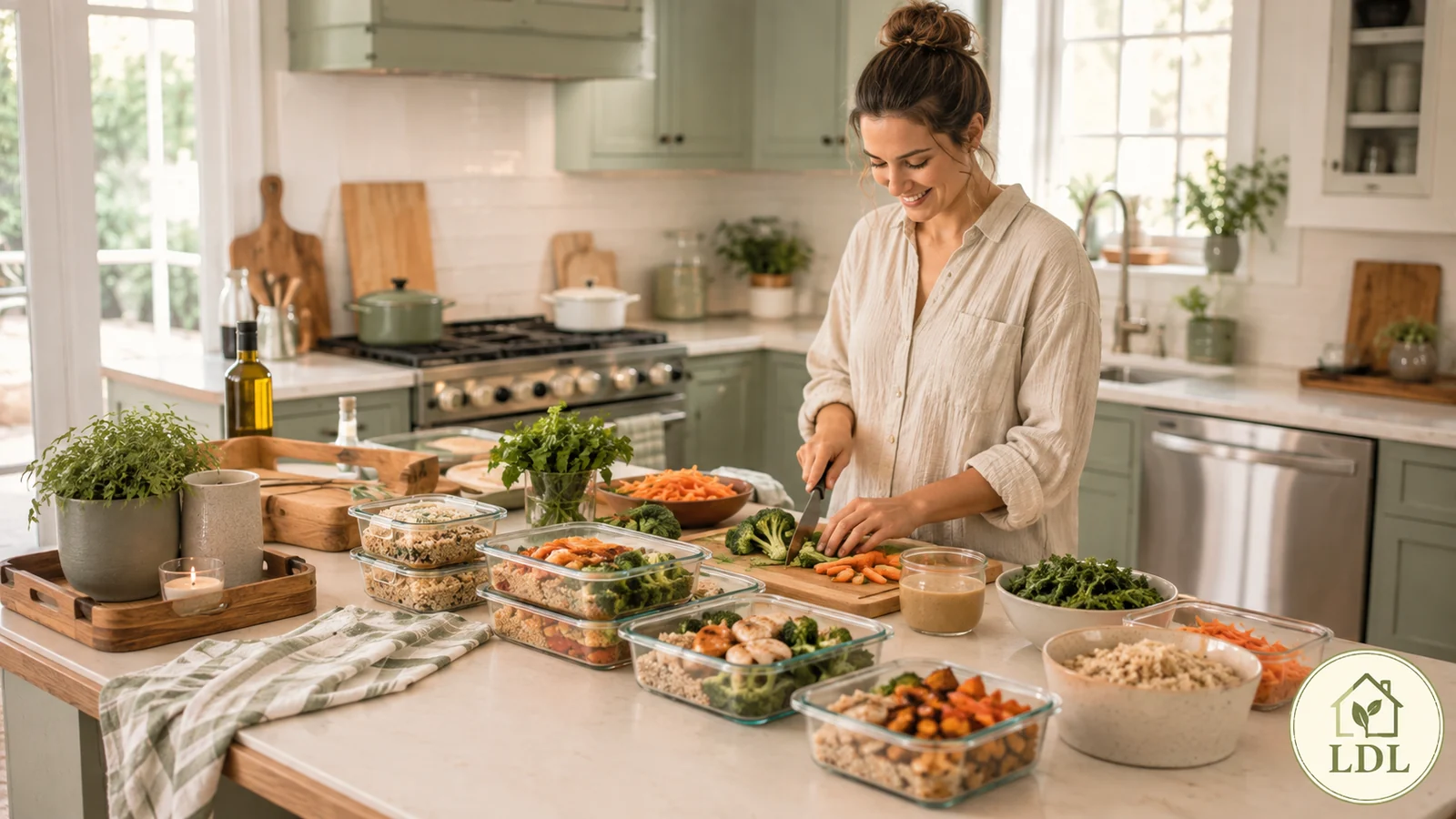
Some evenings, the recipe is not the exhausting part. It is everything around it. You are hungry, somebody is asking what is for dinner, the pan is already heating—and the spatula is nowhere near the stove. The spice you use every week is hiding behind six others. The only clean food container has no matching lid. By the time the meal is ready, the counter looks like another task waiting for you.
If that sounds familiar, you probably do not need more motivation. You need less friction. The shortcuts below are meant to remove the small, repeated annoyances that quietly drain time and energy from cooking. Most of them start with rearranging what you already own. A product only earns a place when it solves a problem that keeps showing up.
1. Keep your everyday cooking tools in one reach zone
If dinner regularly begins with opening three drawers to find the same spoon, tongs or peeler, you are spending energy before the cooking has really started. Put the small group of tools you use most often close to the place where you actually use them.
This is not an invitation to cover the counter with every utensil you own. Keep the everyday handful nearby; let the once-a-month gadgets stay tucked away. The goal is that when the pan is hot and you need the spatula, your hand already knows where to go.
2. Store spices by frequency, not by alphabet
There is a particular kind of kitchen irritation in knowing you own the cumin and still having to move half a shelf to find it. If the same five or six seasonings appear in most of your meals, give those the easiest spots. Baking spices and less-used blends can live farther back.
The storage style should follow the space you actually have. If the side of your refrigerator is unused and magnetic, a magnetic spice rack can turn that dead space into easy access. A tiered shelf works better inside a cabinet. A revolving rack can make sense if you have counter room. The useful question is not “Which one looks most organized?” It is “Which setup stops me from digging for the same spice every night?”
If magnetic storage fits your kitchen, the HuggieGems Magnetic Spice Rack Organizer product guide → is one option included in this guide. Check the product guide first for fit and limitations; there is no reason to leave the site and shop before you know whether the format suits your space.
Not sure which format fits? Compare magnetic, tiered and revolving spice racks →
3. Prep one flexible ingredient instead of five complete meals
Full Sunday meal prep sounds wonderful until Sunday arrives and you are already tired. If the thought of cooking five complete meals in advance makes you want to skip meal prep altogether, make the job smaller.
Prepare one thing that tomorrow-you will be relieved to find: washed vegetables, cooked rice, a tray of roasted vegetables, a portioned protein or a sauce that can stretch across two meals. That one head start can turn tomorrow's dinner from “I have to start from zero again” into “half of this is already handled.”
You also keep more freedom. The same prepared ingredient can become a bowl, wrap, side, soup or quick dinner instead of locking the family into five meals chosen days earlier.
4. Give leftovers and prepped ingredients one container system
If you have ever held a container in one hand while trying six lids with the other, you already know why food storage can become its own tiny chore. Awkward shapes, missing partners and unstable stacks make putting food away feel harder than it should.
You do not need to throw out containers that still work. But if you are gradually simplifying, favor shapes and sizes that stack well in your own refrigerator and cabinet. Glass can suit households that value visibility and reheating; plastic is lighter and can be easier for larger sets or packed lunches. The best system is the one you can actually use without a lid hunt every night.
5. Date leftovers when you put them away—not later
That mystery container at the back of the refrigerator usually did not become mysterious on purpose. Someone meant to remember what was inside. Then two days passed.
Keep a marker and removable food labels right beside the storage containers. When food goes into the refrigerator or freezer, write the name and date before the container leaves your hand. The habit works because it happens at the exact moment you still know what the food is.
If you prefer having a large roll ready instead of repeatedly replacing small packs, the Hebayy 1000 Removable Food Labels product guide → is one option we have documented. The product guide covers the label size and practical limitations before you decide whether you need that quantity.
The payoff is small but satisfying: fewer “Is this still good?” moments, less forgotten food, and a refrigerator that is easier to scan when everyone is hungry.
6. Use one main cutting-and-prep setup
In a small or busy kitchen, prep can slowly spread until there is nowhere left to put anything down. One cutting board is by the sink, ingredients are across the counter, scraps are in a bowl on the other side, and suddenly a simple meal feels visually chaotic.
Try giving prep one home: a dependable surface with the board, knife, ingredients for that stage and a small bowl for scraps. Finish that stage, clear it, then move on. You are not trying to cook like a restaurant kitchen; you are simply protecting one usable patch of counter from turning into five half-finished zones.
7. Keep the oil or seasoning you use most at the point of use
When you reach for the same bottle almost every day, making yourself move three things to get to it is unnecessary friction. Keep the item you use constantly somewhere safe and easy to reach near the place where you cook; let the specialty oils and less-used condiments live elsewhere.
A spray-and-pour oil dispenser can make sense if you regularly switch between lightly coating a pan and pouring oil into recipes. But the product is not the shortcut by itself. The real win is shortening the path between “I need this” and “I can use it.”
If that two-in-one format would genuinely replace two things you already reach for, the YARRAMATE 16 oz 2-in-1 Oil Dispenser & Sprayer product guide → is one option. The product guide is there so you can check the listing details before deciding whether it solves a real problem for you.
8. Choose a dish-drying setup that matches your counter—not someone else's
There is nothing relaxing about finishing dinner and realizing the drying rack has swallowed the only counter space you have left. On the other hand, a tiny mat can be just as frustrating if your household regularly washes a full sink of dishes.
A large rack works when dish volume and counter space justify it. A compact rack can suit lighter loads. A roll-up dish drying rack can use the sink itself and then disappear when dry, while a mat is simple and flexible but gives you no vertical stacking.
If over-sink drying would free the exact patch of counter you keep wishing you had, the Surpahs Roll-Up Dish Drying Rack product guide → is one specific option included in this guide. Measure your sink opening first. A space-saving product that does not fit is just another thing to store.
The right drying setup should make cleanup feel finished sooner, not leave you rearranging wet dishes because the system does not match the kitchen.
Compare dish racks, roll-up racks and drying mats → if counter space is the part of cleanup that keeps bothering you.
9. Use cooking wait time for one tiny reset
“Clean as you go” can sound like excellent advice right up until you are cooking while tired, watching the stove and answering questions at the same time. So make the expectation much smaller.
While water boils, put one ingredient away. While something simmers, move the cutting board to the sink or dishwasher. While the oven finishes, wipe the one surface you used most. Then stop when the food needs you.
You are not trying to earn a spotless kitchen before dinner. You are simply removing one piece of the mess so the room feels less punishing when the meal is over.
10. End with a five-minute setup for tomorrow
Few things make cooking feel heavier than walking into yesterday's unfinished kitchen. The opposite is also true: one clear prep surface can make tomorrow's meal feel possible before you have even decided what to cook.
Before leaving the kitchen, reset only the things that will matter most next time. Clear the main prep space, return the everyday tools, notice whether one staple needs refilling, and move an ingredient from the freezer if tomorrow's meal needs it.
Keep it to five minutes. This is not a nightly kitchen makeover. It is a small kindness to the person who has to make the next meal—and that person happens to be you.
Start here
You do not need all ten shortcuts at once
If your kitchen already feels like one more place where you are behind, please do not turn this list into another checklist to fail. Pick the frustration that repeats most often.
If you are always hunting for spices, fix spice access. If leftovers disappear until they are questionable, start with labels. If cleanup is the part you dread, change the drying setup or try one tiny reset while food cooks.
A useful kitchen system earns its place by removing work you repeatedly do. You should feel the difference in an ordinary Tuesday dinner—not just admire the system when everything is perfectly organized.
FAQ
Common questions about making cooking easier
What is the fastest place to start if cooking feels overwhelming?
Start with the moment that makes you sigh most often. If you waste time searching for ingredients, improve visibility first. If cleanup is what makes you avoid cooking, work on the drying or cleanup routine first. Solving one repeated irritation is more useful than reorganizing the whole kitchen.
Do I need to buy organizers or kitchen tools to save time?
No. Several of the biggest wins cost nothing: grouping everyday tools, moving frequently used items closer, using one prep zone, preparing one flexible ingredient and doing one tiny reset while food cooks. Buy something only when the free version does not solve the problem well enough.
Is full weekly meal prep necessary?
No. If full meal prep becomes another exhausting weekend project, it defeats the purpose. Preparing one versatile ingredient, washing produce or making an extra portion during a meal can still make tomorrow easier.
Are glass or plastic food containers better for leftovers?
They solve different needs. Glass is heavier but often convenient for reheating and seeing what is inside. Plastic is lighter and can be easier for larger sets or food that travels. The better choice is the one that fits how your household actually stores, carries and reheats food.
What works best in a very small kitchen?
Protect one clear prep surface, keep only frequently used items easy to reach, and make use of vertical or otherwise-unused space. Measure before buying any organizer. In a small kitchen, a badly sized “solution” can become the next source of clutter.
Your turn
Which part of cooking steals the most time in your kitchen?
Tell us which repeated search, prep or cleanup step you most want to shorten.
Comments are reviewed before anything is published. Your response will not appear publicly automatically.
Continue
More ways to make cooking lighter
A note on this guide: Lighter Day Living has not personally tested the products linked in this article. Product links in this article open Lighter Day Living product guides rather than Amazon directly. Each guide contains clearly labeled Amazon affiliate links. Product details are summarized from retailer listings, with limitations noted where relevant.