
Small-Space Storage
Small-Space Storage Ideas When You're Running Out of Room
When every drawer is full, the closet door barely closes and one more basket would just become another thing to trip over, you probably do not need to squeeze harder. You need to find the space your room is already hiding.
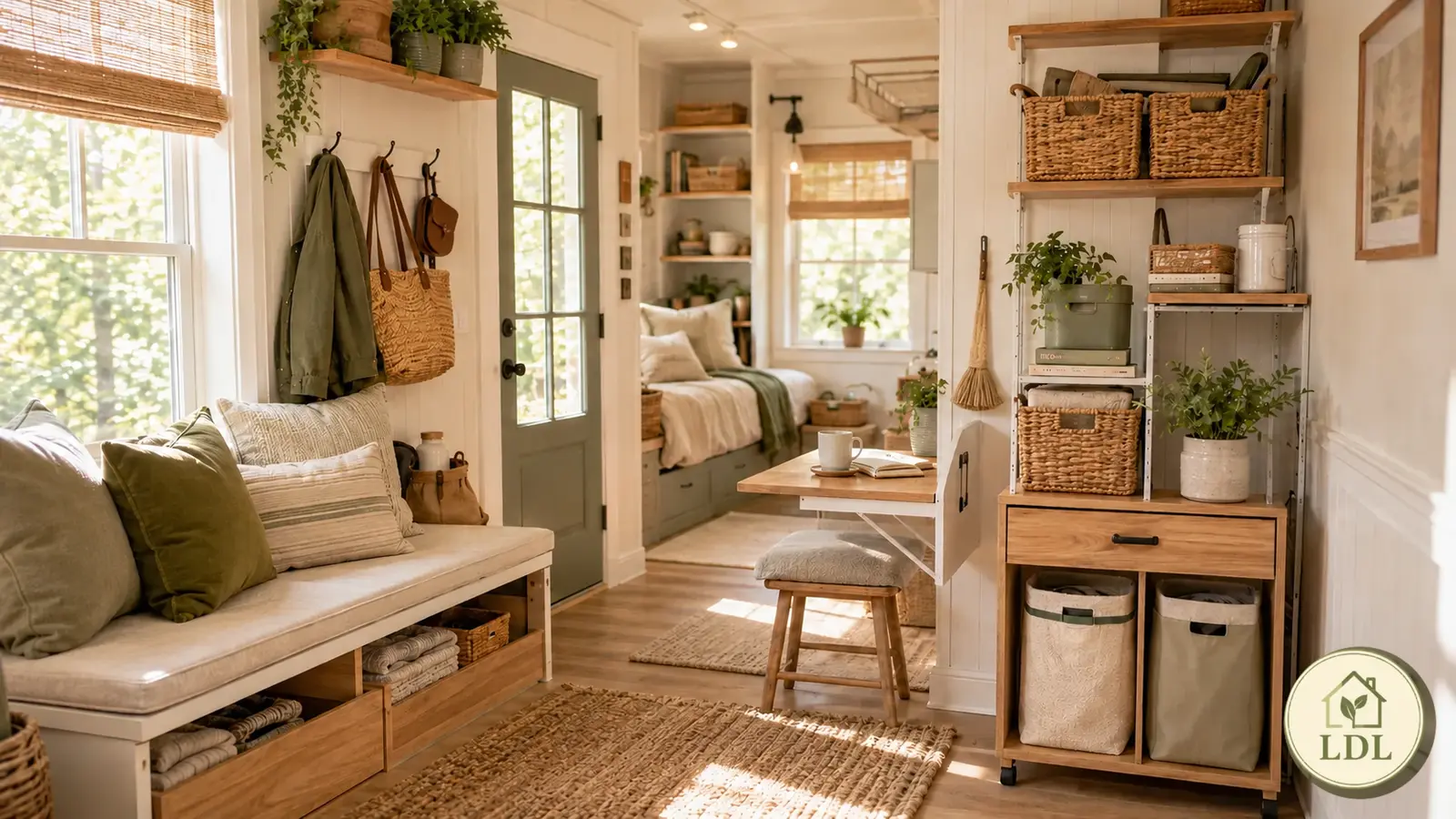
Running out of room rarely happens all at once. It happens slowly. A bag gets tucked beside the dresser. Extra bedding moves onto a chair. The top of the wardrobe becomes a holding zone. A new bin appears because the last bin is full. Then one day you look around and realize the room still contains all the same things—but now it feels as if there is nowhere left to put any of them.
That feeling can make you want to buy more storage immediately. But in a genuinely small home, every organizer has a cost. It takes up floor space, adds another surface to manage or hides things so well that you forget you own them.
The better question is not, “Where can I fit another container?” It is, “Which kind of space am I not using well yet—and what actually deserves to live there?”
1. First, figure out what kind of “no space” problem you actually have
Two homes can both feel packed and need completely different fixes.
- No floor space: you may need vertical, wall-adjacent or under-furniture storage.
- No visible space: the room may need fewer exposed categories, not more shelves.
- No easy-access space: storage exists, but daily items are buried behind occasional ones.
- No backup space: seasonal items, bulk purchases or extra bedding are competing with everyday things.
- No category boundary: one type of item keeps spreading because it has never been given a realistic limit.
Once you know which problem is creating the pressure, you can choose storage that fixes that specific friction instead of simply moving it around.
2. Use height before adding another wide piece of furniture
In a small room, the center of the floor is precious. A wide cabinet may technically add storage while making the room feel much harder to move through.
Look upward instead. Corners, narrow wall-adjacent areas and the space above existing low furniture often hold more potential than another broad floor unit.
The Furinno TURN-N-TUBE 5-Tier Corner Shelf is one example of using height rather than width. Its footprint is about 11.6 × 11.6 inches, while the unit rises to about 57.7 inches.
That can be useful when you have a genuinely unused corner and need light-duty storage for books, toiletries, décor or small household items.
Think twice before buying it: each shelf is small, the seller lists a 10-pound-per-shelf limit, and a tall narrow shelf needs sensible anchoring where appropriate. If your problem is bulky blankets or large bins, a slim corner shelf will not magically make those items smaller.
Read our guide to the Furinno corner shelf →
3. Treat the space under the bed like a real storage zone
Under-bed storage has a bad reputation because it can become the place where things disappear for two years. But the space itself is not the problem. The problem is putting unrelated things under there with no rule for when they come back out.
Give the area one or two clear jobs:
- out-of-season clothes;
- extra bedding;
- occasion-specific shoes;
- travel items you use only a few times a year;
- one clearly labeled category of keepsakes.
Avoid filling under-bed space with everyday things that you need every morning. Low hidden storage is much better for lower-frequency categories.
The Tsinglax Under-Bed Storage with Wheels, 2-Pack is listed at about 30 inches long × 16.2 inches wide × 7.5 inches high per bin, with clear covers and rolling casters.
The wheels can make deep storage easier to pull forward, but the first measurement that matters is the actual clearance beneath your bed—not the capacity printed on the listing.
Think twice if: your bed clearance is close to 7.5 inches, you have thick rugs that make rolling difficult, or you need rigid waterproof storage rather than fabric-covered organizers.
Read our guide to the Tsinglax under-bed storage →
4. Hidden storage is useful only when you can remember what is hidden
Closed storage can make a room feel calmer, especially when open shelves are already visually busy. But hidden storage can also create a second problem: buying another item because you forgot you already had one.
If you use closed storage, add one memory cue:
- a simple label;
- a written list inside the lid;
- one category per container;
- a photo on your phone of what is stored in seasonal bins;
- clear fronts or transparent drawers when visibility matters more than hiding the contents.
The goal is not to make everything invisible. It is to remove visual noise without removing your ability to find things.
5. Make furniture earn its footprint
In a large home, a bench can simply be a bench. In a small home, every larger piece should justify the amount of floor it occupies.
That does not mean every chair has to contain a secret compartment. It means that when you are already considering a new piece of furniture, multi-purpose function can matter more than adding a separate storage unit afterward.
The SONGMICS MAZIE 43-Inch Folding Storage Ottoman Bench combines seating with concealed storage. The selected version is listed at about 43 inches wide × 15 inches deep × 15 inches high.
That may make sense at the end of a bed, along a clear wall or in an entryway where you genuinely need both seating and storage.
Think twice if: your room does not have a clear 43-inch stretch, the bench would narrow a walking route, or you are buying it only because the hidden compartment sounds useful. Tape the footprint on the floor first and live around that rectangle for a day.
Read our guide to the SONGMICS storage bench →
6. Stack upward—but do not create a storage puzzle
Stacking is one of the easiest ways to use vertical space, but ordinary stacked bins often create a familiar problem: the thing you need is always in the bottom container.
If you need regular access, choose a system where the lower level can still open independently. Drawers, front-opening bins or shelf risers can preserve the space-saving benefit without requiring you to unstack everything first.
The Vtopmart 4-Pack Large Stackable Storage Drawers use pull-out drawers that can stack vertically. Each listed unit is about 12 inches deep × 7.5 inches wide × 7 inches high, with a narrower inner drawer width of roughly 5.8 inches.
That narrow shape can work well for toiletries, small pantry items, accessories or household supplies where you want to build upward while keeping each level accessible.
Think twice if: you need to store wide bottles or bulky packages. Measure the object itself, not just the shelf where the drawer will sit. Also calculate the total stacked height before buying several units.
Read our guide to the Vtopmart stackable drawers →
7. Use the back of a door carefully
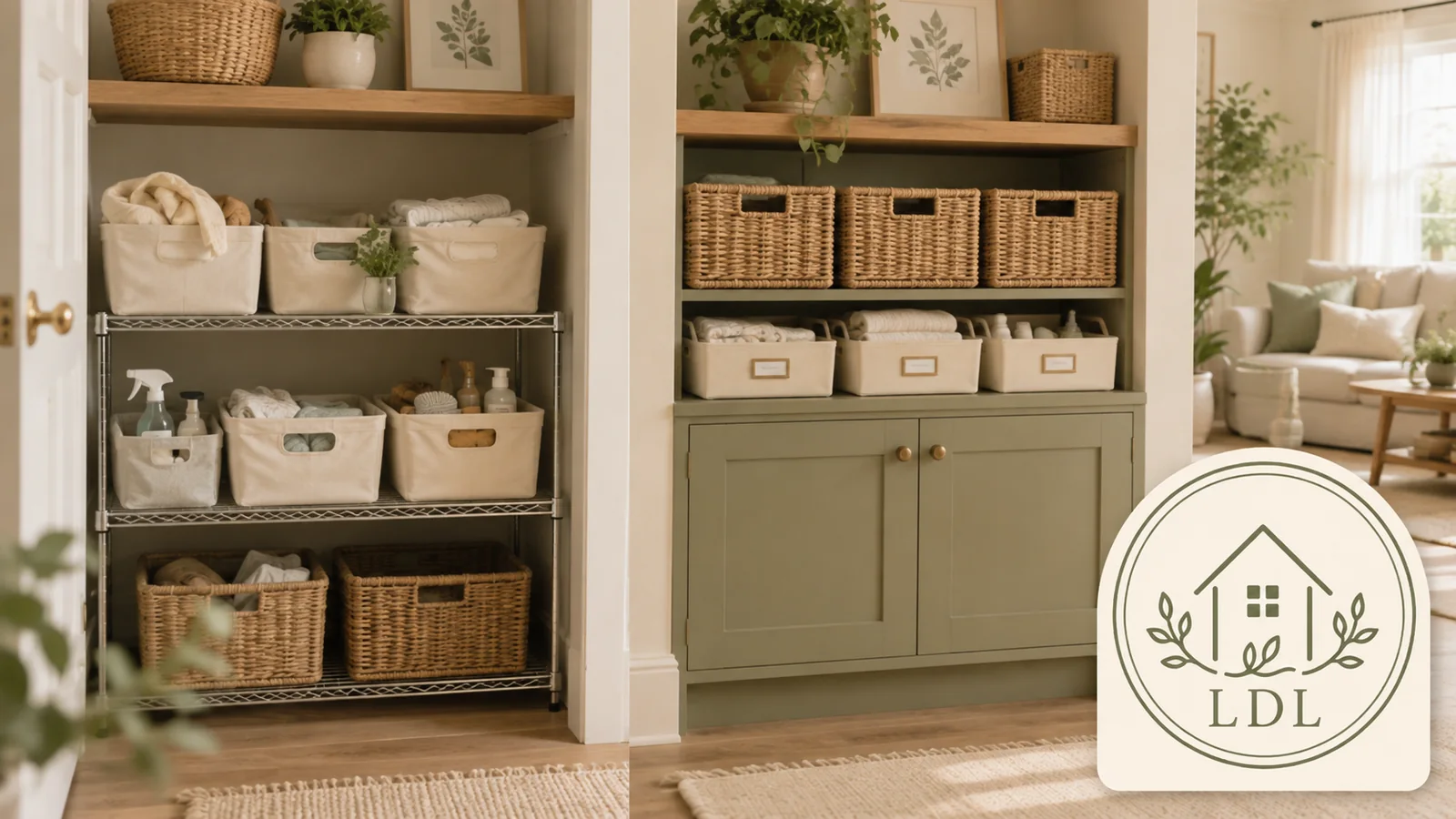
The back of a door can provide useful hanging space without consuming floor area, especially for lightweight categories such as accessories, small bags, cleaning cloths or certain bathroom items.
But door storage is not free space. Anything added there changes how the door swings, closes and feels.
Before adding an over-door organizer or hooks, check:
- whether the door still closes without rubbing the frame;
- whether the items will hit the wall when the door opens;
- whether the added weight is appropriate for the hardware;
- whether you will actually return the category to that spot.
If the door already has a useful job or the room is visually crowded, leaving it empty may be the better small-space choice.
8. Stop storing backups in premium everyday space
Small homes become frustrating when today's things and next month's things compete for the same shelf.
Keep the active version of an item where you use it. Move unopened backups to a secondary zone: a higher shelf, under-bed container, closet top or other lower-frequency storage area.
This is especially useful for:
- toiletries and cleaning refills;
- extra paper products;
- seasonal clothes;
- bulk pantry purchases;
- spare bedding and towels.
You are not getting rid of the backup. You are simply refusing to make an item you may not open for six weeks occupy the easiest shelf in the room.
Related: How to Organize a Small Pantry When You Can't Find Anything →
9. Create one overflow rule before buying another organizer
Every category needs a limit, even in a beautifully organized home. Otherwise storage expands every time the category expands.
Choose one physical boundary for categories that tend to grow:
- one basket for reusable bags;
- one drawer for cables;
- one under-bed bin for seasonal clothes;
- one shelf for backup toiletries;
- one container for children's craft supplies.
When the boundary is full, that is information. It means the category needs editing, not automatically a second container.
This single rule can prevent a small space from becoming a collection of increasingly specific storage products.
10. Keep frequently used things easier to reach than rarely used things
Small-space organization becomes exhausting when you have to move three things to reach the fourth.
Think in access levels:
- Daily: waist-to-eye level, open drawers, easy hooks, front rows.
- Weekly: lower shelves, upper shelves you can reach safely, secondary drawers.
- Seasonal/rare: under-bed storage, closet tops, less convenient corners.
This sounds obvious, but small homes often do the opposite because empty space gets filled wherever it appears. Reordering by frequency can make the same amount of storage feel much more usable.
11. Leave some empty space on purpose
When storage is tight, an empty shelf can look like wasted opportunity. It is not.
A little breathing room makes categories easier to return, lets you see what you own and gives temporary items somewhere to land without immediately becoming clutter.
If every container is packed to the lid and every shelf is filled edge to edge, the system has no tolerance for ordinary life. One grocery trip, laundry day or gift can push the whole room back into overflow.
You do not need 30 percent empty everywhere. Even a small amount of flexible capacity in the most active zones can make the home easier to reset.
A 30-minute small-space storage reset
If your room feels impossible right now, do not begin by reorganizing the entire house. Choose one room and set a 30-minute timer.
- Minutes 0–5: remove obvious trash, donations and things that belong in another room.
- Minutes 5–10: identify the category causing the most physical crowding.
- Minutes 10–15: check unused vertical, under-bed, behind-door and hidden space.
- Minutes 15–20: move backups or seasonal items out of premium daily-access space.
- Minutes 20–25: give the problem category one clear boundary.
- Minutes 25–30: measure the remaining physical problem before deciding whether any organizer is actually needed.
The short version
When you're running out of room, make storage work harder—not your home
Use height before sacrificing more floor space.
Reserve under-bed and hidden storage for lower-frequency categories.
Choose stacking systems that do not make the bottom layer impossible to reach.
Make larger furniture earn its footprint with more than one useful function.
Move backups out of premium everyday space and give growing categories a physical limit.
The goal is not to fit the maximum number of belongings into the minimum number of square feet. It is to make the things you keep easier to live with.
FAQ
Common questions about small-space storage
How do I create more storage in a small room?
Start with underused vertical space, corners, under-bed areas and furniture that can serve more than one function. Before adding storage, move backups and low-frequency items out of your easiest-access zones so daily things have room.
What is the best way to use vertical space?
Choose storage that fits the category and remains safe and accessible. Narrow shelving, stackable drawers and wall-adjacent storage can work well, but tall units should be stabilized as directed and should not exceed their listed loads.
Is under-bed storage a good idea?
Yes, especially for seasonal clothes, extra bedding and other lower-frequency items. Measure the actual bed clearance first and keep categories simple so the space does not become forgotten overflow.
How do I store things in a small home without making it look cluttered?
Reduce the number of visible categories, use closed storage selectively and keep a memory cue such as labels or clear fronts for things you might otherwise forget. Leaving some surfaces and shelf space open also reduces visual noise.
Should I use stackable bins or drawers?
Stackable bins work best for things you access infrequently. If you need the contents often, drawers or front-opening systems are usually easier because you can reach lower levels without unstacking everything.
Your turn
Which limited-space storage problem is hardest in your home?
Tell us whether vertical, hidden or multi-purpose storage would solve a real access problem for you.
Comments are reviewed before anything is published. Your response will not appear publicly automatically.
Continue
Build systems around the places that keep overflowing
A note on this guide: Lighter Day Living has not personally tested the products mentioned in this guide. Product dimensions, materials, load figures and listing claims referenced here come from Amazon listing information reviewed for this guide on August 10, 2026. The organization advice is general and should be adapted to your own room dimensions, household needs and installation conditions. Product links in this article open Lighter Day Living product guides rather than Amazon directly. Each guide contains clearly labeled Amazon affiliate links. Verify current retailer details before purchasing.