
Decision guide
Bread Box vs Airtight Container: Which Keeps Bread Fresher?
If your bread keeps becoming dry, rubbery, soft in the wrong way—or moldy before you finish it—the best storage method depends less on what looks tidy on the counter and more on the kind of bread you actually eat.
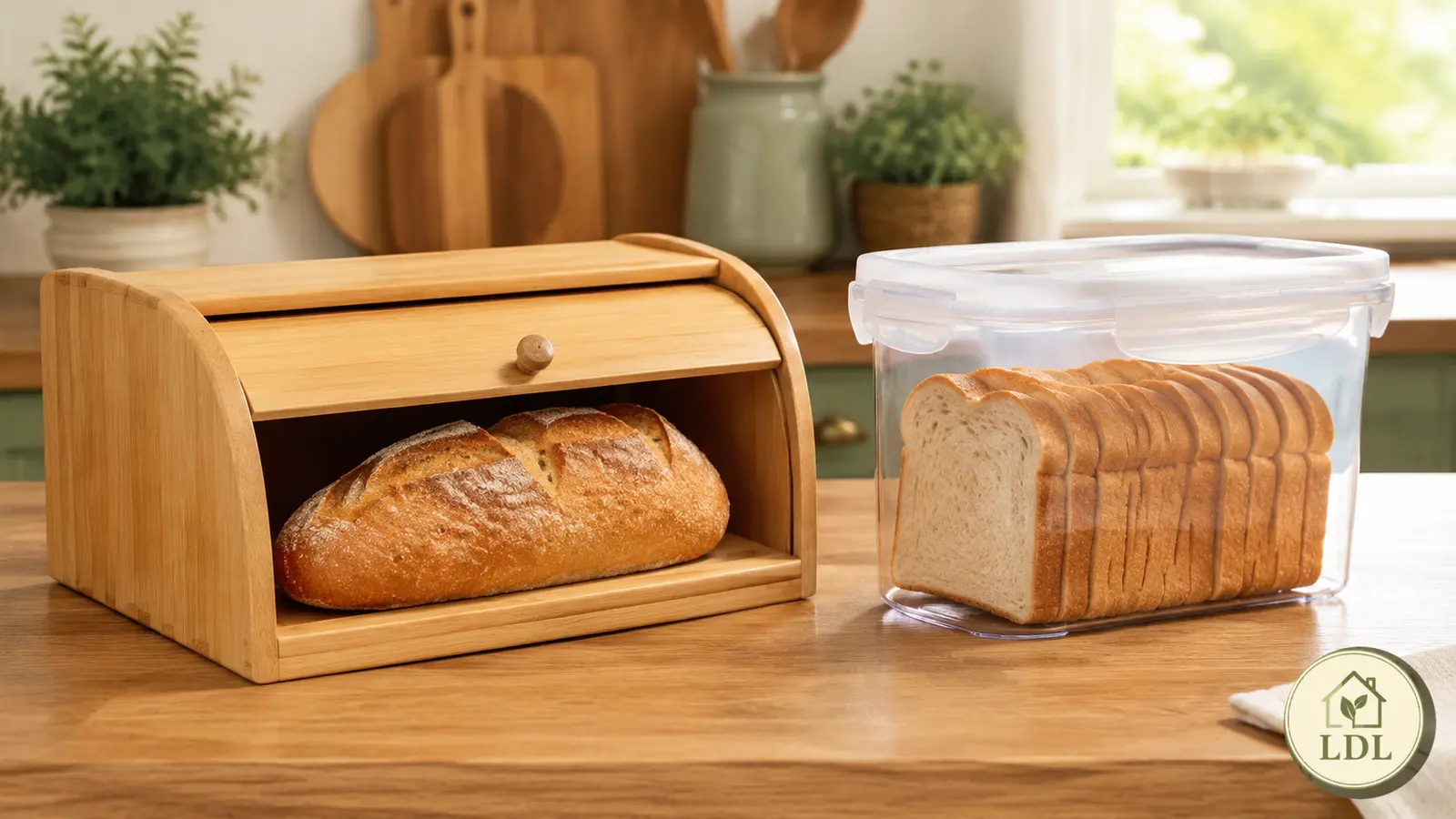
Bread storage sounds like one of those tiny household decisions that should not require this much thought. Then you open the bag and the slices feel dry. Or you put a beautiful homemade loaf into a sealed container and the crust that was crisp yesterday is soft today. Or worse—you find one fuzzy spot and realize the rest of the loaf has to go too.
That is the frustrating part: “fresh” does not mean exactly the same thing for every loaf. With soft sandwich bread, you may care most about keeping the crumb tender. With sourdough or another crusty loaf, preserving the crust matters too. With homemade bread, you may also be dealing with more moisture and fewer preservatives than the packaged bread you usually buy.
So the real question is not simply, “Is a bread box better than an airtight container?” It is:
What are you trying to protect—the soft crumb, the crust, the loaf from drying, or the loaf from sitting around too long?
The short version: bread box or airtight container?
Choose a bread box when airflow matters.
It can protect bread from the open kitchen while avoiding the completely sealed environment that can soften a crisp crust. This is especially useful for bread you expect to eat fairly soon.
Choose airtight storage when softness matters most.
A sealed container or well-closed bag limits moisture loss, which can suit soft sandwich loaves, buns and similar breads where a crisp crust is not the goal.
Choose the freezer when the loaf will outlast your appetite.
If your household regularly throws away the last third of a loaf, the better fix may be freezing part of it early rather than searching for a countertop container that makes bread last indefinitely.
Why bread goes disappointing even before it looks spoiled
There are two different problems people often lump together as “the bread went bad.”
Staling is largely a texture problem. Bread firms as its starch structure changes after baking, while moisture also redistributes through the loaf. A stale loaf may be unpleasant but is not the same thing as a moldy loaf.
Mold is spoilage. Warmth, moisture, time and the loaf itself can create conditions where mold grows. And because bread is porous, USDA recommends discarding moldy bread rather than trimming around the spot. USDA mold guidance ↗
This distinction matters because a storage method that helps with one problem can make another quality issue more noticeable. A tight seal may help a soft loaf hold moisture, but it can also soften a crust you wanted to keep crisp. More airflow may help crust texture, but too much exposure can let the bread dry faster.
At a glance
What each storage method actually changes
Bread boxProtects the loaf while allowing some air exchange; useful when you want a middle ground between open-air storage and a fully sealed container.
Airtight containerLimits moisture exchange; useful when softness matters more than preserving a crisp exterior.
FreezerBest when you need genuinely longer storage rather than another few days on the counter.
Option 1: a bread box for bread you want to keep on the counter
A bread box is not a magical freshness machine. What it does well is create a protected countertop space that is less exposed than leaving a loaf uncovered but less sealed than locking it inside an airtight container.
That middle ground can be useful for crusty bread. A loaf with a crisp exterior contains two textures you are trying to preserve at once: a relatively dry crust and a softer interior. Seal the loaf tightly and moisture moving outward from the crumb can soften that crust. Leave it completely exposed and the whole loaf can dry faster.
A ventilated bread box can make sense if you routinely eat homemade loaves, rolls, bagels or bakery bread over the next few days and want one dedicated place for them.
This guide includes the Sunhoo Large Pine Wood Double-Layer Bread Box. The retailer listing describes a vented pine-wood box with two levels, magnetic doors and acrylic viewing panels.
There is one detail I would not ignore: the Amazon listing information we recorded contains conflicting dimensions in different sections. That is exactly the kind of thing worth checking on the current retailer page before ordering, especially if your counter sits under low cabinets or the box needs to fit a specific corner.
Think twice if: you rarely keep bread on the counter, your kitchen is already short on counter space, or your household normally eats packaged sandwich bread that stays in its own bag perfectly well.
Read our guide to the Sunhoo bread box →
Option 2: an airtight container when drying out is the bigger annoyance
An airtight container solves a different problem: it slows the exchange of moisture between the bread and the surrounding air.
That is often useful for soft bread. If the thing you dislike most is sandwich bread becoming dry around the edges, a well-closed bag or suitable sealed container can be more useful than ventilation.
But airtight storage comes with a tradeoff. If the bread is supposed to have a crisp crust, trapping the loaf in a sealed environment tends to push the texture toward soft rather than crisp.
And if you baked the bread yourself, do not seal it while it is still warm. Let it cool completely first. Warm bread continues releasing moisture; sealing that moisture inside can create condensation and a damp environment you did not intend.
That does not mean you need to buy a special “bread container.” For many households, the original bag, a reusable food-storage bag, or an existing container that comfortably fits the loaf already does the job.
Think twice if: you are storing a crusty artisan loaf and the crust is part of what you love about it, or you are buying a giant container solely because you assume “airtight” automatically means “fresher for longer.”
For soft sandwich bread, airtight usually makes more sense
Soft sliced bread is designed around a tender crumb and soft crust. There is little benefit in introducing extra airflow simply for the sake of airflow.
If the original packaging closes well and the loaf gets eaten at a normal pace, you may already have the right storage system. A bread box can still keep the package visually contained and protect it from being crushed, but you do not necessarily need to remove the loaf from its bag.
This is one of those cases where the cheaper answer may also be the better one: close the bag properly, keep it away from excessive heat and direct sun, and freeze part of the loaf if your household does not finish it quickly.
For crusty bread, the answer changes
A crisp baguette, sourdough boule or bakery loaf is more difficult because the texture you want is temporary by nature.
Put that loaf in a fully airtight container and the crust can soften. Leave it uncovered for too long and the crumb dries. A bread box, paper wrap or another breathable short-term method can be the more sensible compromise when you expect to eat the loaf soon.
But even the best bread box does not freeze time. If you bought a large loaf for one or two people and already know half will still be there several days later, portioning and freezing some of it early is usually more practical than trying to preserve the whole loaf at room temperature.
Homemade bread changes the decision again
Homemade bread creates a slightly different emotional problem because you put effort into making it. Throwing part of it away feels worse than tossing the end of an inexpensive supermarket loaf.
First, let the loaf cool completely. Then choose storage based on what you baked:
- Crusty lean loaf: short-term breathable storage or a bread box can help protect the crust better than a hard airtight seal.
- Soft sandwich loaf: a bag or airtight container can help keep the crumb soft.
- More bread than you can eat soon: slice or portion what you will not use and freeze it.
If you use a bread machine, our guide What Can You Actually Make in a Bread Machine—Besides Bread? looks at whether the appliance is useful enough to justify the counter space. Storage is the next part of that same question: making bread conveniently only helps if the loaf gets eaten rather than wasted.
Should you put bread in the refrigerator?
The refrigerator sounds like the obvious freshness solution because cold storage slows many forms of food spoilage. Bread quality is more complicated.
Research on bread staling has found that starch retrogradation can occur particularly quickly around refrigerator temperature. In one study comparing storage at 25°C, 4°C and −18°C, the 4°C condition showed the highest rate of starch retrogradation. Bread-staling study ↗
So if your goal is simply to keep ordinary bread pleasant to eat, the fridge may trade one concern for faster firming/staling. The freezer is different: frozen storage greatly slows the quality changes associated with staling, although texture quality can still decline with long storage. FDA also notes generally that properly frozen food kept at 0°F (−18°C) remains safe, while quality gradually declines over time. FDA storage guidance ↗
Bread box vs airtight container by bread type
Soft packaged sandwich breadAirtight/original packaging is usually the more logical choice; a bread box is optional secondary storage.
Crusty bakery loafBread box or another breathable short-term method usually preserves the crust better than a hard seal.
Homemade sandwich loafCool completely, then use a bag or airtight container if maintaining softness is the priority.
Homemade crusty loafBread box for short-term countertop storage; freeze what you will not finish soon.
Extra sliced breadFreeze portions instead of trying to make countertop storage stretch indefinitely.
What if your bread keeps molding?
If mold is the recurring problem, switching containers may help only if your current storage is trapping excess moisture. But it is also worth asking a simpler question: are you buying or baking more bread than the household can finish at room temperature?
Try changing the quantity before changing the equipment:
- Buy a smaller loaf if that is realistic.
- Freeze half the loaf on the day you buy or bake it.
- Make sure homemade bread is completely cool before enclosing it.
- Keep the storage area clean and dry.
- If mold appears, discard the bread rather than trying to rescue unaffected-looking slices.
USDA specifically lists bread and baked goods among foods that should be discarded when moldy because porous foods can be contaminated below the visible surface. USDA mold guidance ↗
What if your bread keeps going stale instead?
Staling is a different failure. If the bread is drying or firming before you finish it:
- keep soft bread properly closed rather than loosely folded;
- avoid storing ordinary bread in the refrigerator solely to “keep it fresh”;
- freeze the portion you will not use soon;
- for crusty bread, accept that preserving a crisp crust and a moist crumb is a short-term balancing act rather than something a container can solve forever.
This is where buying the right amount matters more than buying the right box.
Do you need a dedicated bread box at all?
Not necessarily.
A bread box earns its footprint when:
- your household keeps bread, rolls or bakery items on the counter almost every day;
- you want them protected without fully sealing everything;
- bags of bread are constantly being crushed, moved or visually cluttering the counter;
- you actually have enough counter space for the box.
It probably does not earn its footprint when:
- you buy one soft sliced loaf at a time and the original bag already works;
- your counter is already crowded;
- you mostly freeze bread;
- you are hoping a bread box will make a loaf stay bakery-fresh for a week.
If counter space is already your problem, read How to Organize a Small Kitchen When You're Out of Space before adding another countertop item. A storage product should solve more friction than it creates.
Try this one-week bread test before buying anything
You can usually figure out your real storage problem without purchasing a container.
- Notice the bread you actually buy. Is it soft sandwich bread, crusty bakery bread, homemade bread, or a mixture?
- Notice the failure. Does it dry, lose its crust, mold, get crushed, or simply sit around too long?
- Use what you already own for one week. Close soft bread properly, use a breathable short-term method for crusty bread, and freeze excess portions.
- Watch what still annoys you. If the real problem is countertop clutter or a crushed loaf, a bread box may help. If the real problem is moisture loss, better sealing may help.
- Only then measure for a product. Measure counter depth, height under cabinets and the typical size of your loaves.
The test matters because “bread storage” can sound like one problem when your household may actually have three: texture, waste and counter clutter.
So, which keeps bread fresher?
For soft sandwich bread, airtight storage usually does the more useful job because preserving softness matters more than airflow.
For crusty or homemade bakery-style bread you will eat soon, a bread box is often the better compromise because it protects the loaf without fully sealing in moisture around the crust.
For bread you will not finish soon, neither wins—the freezer does.
That last answer may be the most useful one. If you are throwing away bread every week, the problem may not be that your bread box is wrong. It may be that you are asking countertop storage to preserve more bread for longer than it realistically can.
Decision shortcut
Choose by the frustration you want to stop
“My sandwich bread dries out.” Keep it well sealed; you may not need a bread box at all.
“My crusty loaf turns soft in a sealed container.” Use a more breathable short-term setup such as a bread box.
“Bread bags make my counter look messy and get crushed.” A bread box can solve the organization problem as well as provide protected storage.
“We never finish the loaf before it declines.” Freeze part of it early.
“I found mold on one slice.” Discard the bread rather than cutting away the visible mold.
FAQ
Common questions about bread boxes and airtight containers
Does a bread box keep bread fresher than an airtight container?
Not for every type of bread. A bread box can be a useful short-term compromise for crusty bread because it provides protection with some airflow. Airtight storage is usually better when maintaining the softness of sandwich bread or buns is the main goal.
Should bread be stored in an airtight container?
Soft bread can do well in airtight storage, provided the bread is fully cooled first if it is homemade. For crusty bread, a tight seal can soften the crust, so the best method depends on the texture you want to preserve.
Is a bread box worth it?
It can be if you regularly keep multiple loaves or baked goods on the counter, want some airflow and have the counter space. If one packaged loaf in its original bag already works for your household, a dedicated bread box may not add much value.
Can I keep bread in the refrigerator?
You can, but refrigeration can accelerate the starch changes associated with bread staling, so it is not automatically the best option for texture. For longer storage of ordinary bread, freezing is often more useful. Follow specific label or recipe guidance for baked goods with perishable fillings.
What should I do if one slice of bread has mold?
Discard the bread. USDA advises discarding moldy bread and baked goods because their porous structure can allow contamination below the visible surface.
Your turn
What bread-storage problem are you trying to solve?
Tell us what kind of bread you keep and what goes wrong before your household finishes it.
Comments are reviewed before anything is published. Your response will not appear publicly automatically.
Continue
Make bread fit the way your kitchen actually works
A note on this guide: Lighter Day Living has not personally tested the bread box discussed in this guide. Product material, ventilation features and dimensions are based on Amazon listing information reviewed on August 10, 2026; the listing contained conflicting dimensions in different sections, so verify the current retailer details before purchasing. Food-safety guidance was checked against USDA/FDA sources, and the discussion of refrigeration-related staling was checked against published bread-storage research. Product links in this article open Lighter Day Living product guides rather than Amazon directly. Each guide contains clearly labeled Amazon affiliate links.